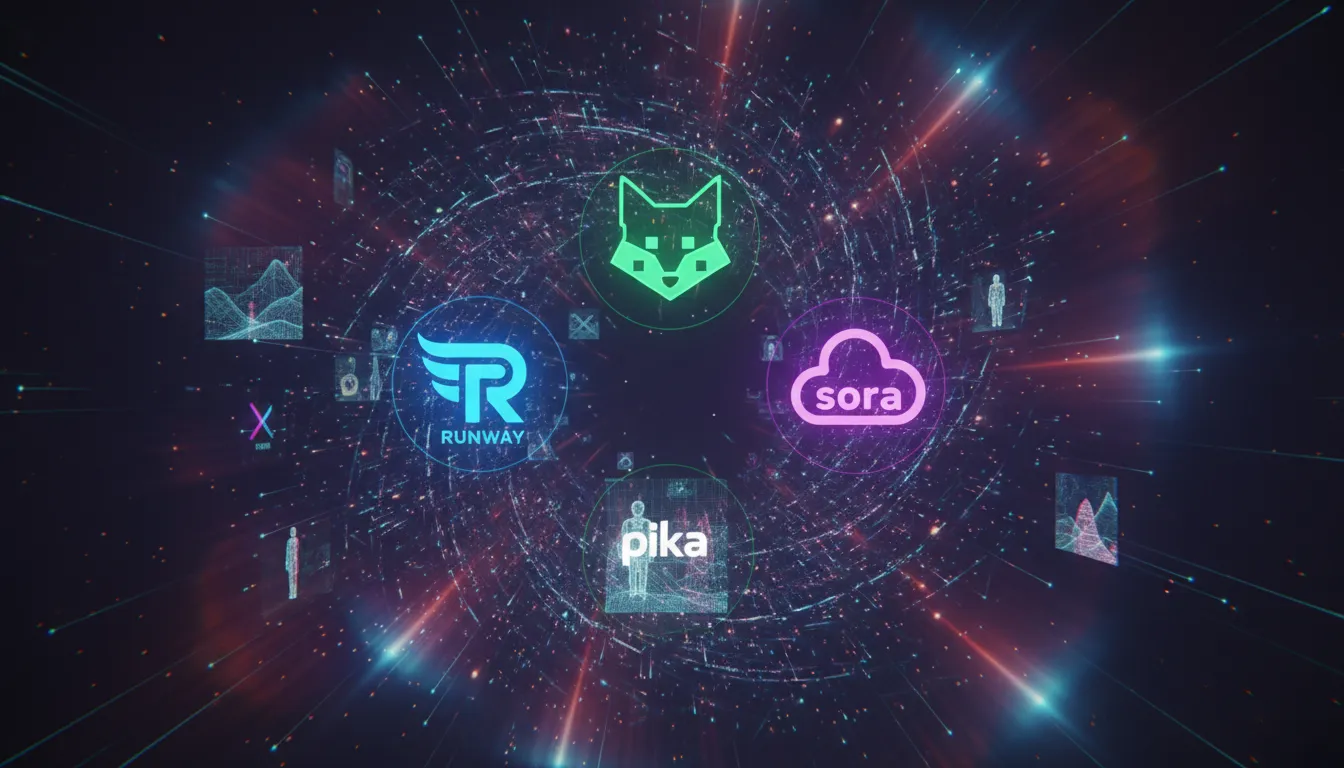
If you thought AI image generation was a massive leap forward, buckle up. The leap from static images to coherent, high-definition video is arguably the most complex challenge in generative AI, and companies are cracking the code faster than anyone predicted.
From Runway Gen-2 to OpenAI's jaw-dropping Sora, we are entering an era where anyone with a laptop can generate Hollywood-tier B-roll simply by typing a sentence.
1. The Big Players in AI Video
The landscape of AI video generation is currently dominated by a few key innovators:
- RunwayML (Gen-2): The pioneer of accessible text-to-video. Runway excels at cinematic styles and allows you to use "Motion Brushes" to control exactly which part of an image should move (e.g., painting the water to make it flow while the mountains stay still).
- Pika Labs: Known for its exceptional ability to animate anime and 3D styles. Pika is incredibly fast and integrates beautifully with Discord for rapid prototyping.
- OpenAI Sora: The game-changer. While currently in limited access, Sora proved that AI can generate 60-second, photorealistic videos with complex camera movements and object permanence—solving the biggest hurdles in AI video.
2. How Marketers and Creators are Using It Today
You don't need to generate a full movie to get value out of AI video right now. Creative professionals are using these tools to:
- Generate B-Roll: Need a slow-motion shot of coffee pouring for a local café ad? Instead of hiring a videographer or buying a $200 stock clip, you can generate it on Runway for pennies.
- Pitch Decks & Storyboards: Directors are generating animated storyboards to pitch feature films to studios, providing a clear visual representation of the mood and lighting.
- Music Videos: Indie musicians are combining AI image generators with Runway to create fully animated, trippy music videos with zero budget.
3. The Technical Hurdles: Temporal Consistency
The hardest part of AI video is "temporal consistency"—making sure that an object doesn't morph into something else from frame to frame. If a character is wearing a red jacket in second 1, the AI needs to remember that the jacket is red (and has the same pockets) in second 4.
Models like Sora solve this by understanding the physics of the 3D world, rather than just predicting pixels.
Frequently Asked Questions (FAQ)
Is AI video generation expensive?
Generating video is much more computationally intensive than generating text or images. Therefore, the subscriptions are slightly more expensive (typically starting around $15-$30/month for a few minutes of generated video). However, compared to traditional video production, it is phenomenally cheap.
Can I use these AI videos for commercial ads?
Yes, paid tiers of platforms like Runway and Pika give you full commercial rights to the videos you generate. However, be cautious of generating videos that look like specific copyrighted IP (like generating a video of Mickey Mouse or Marvel characters).